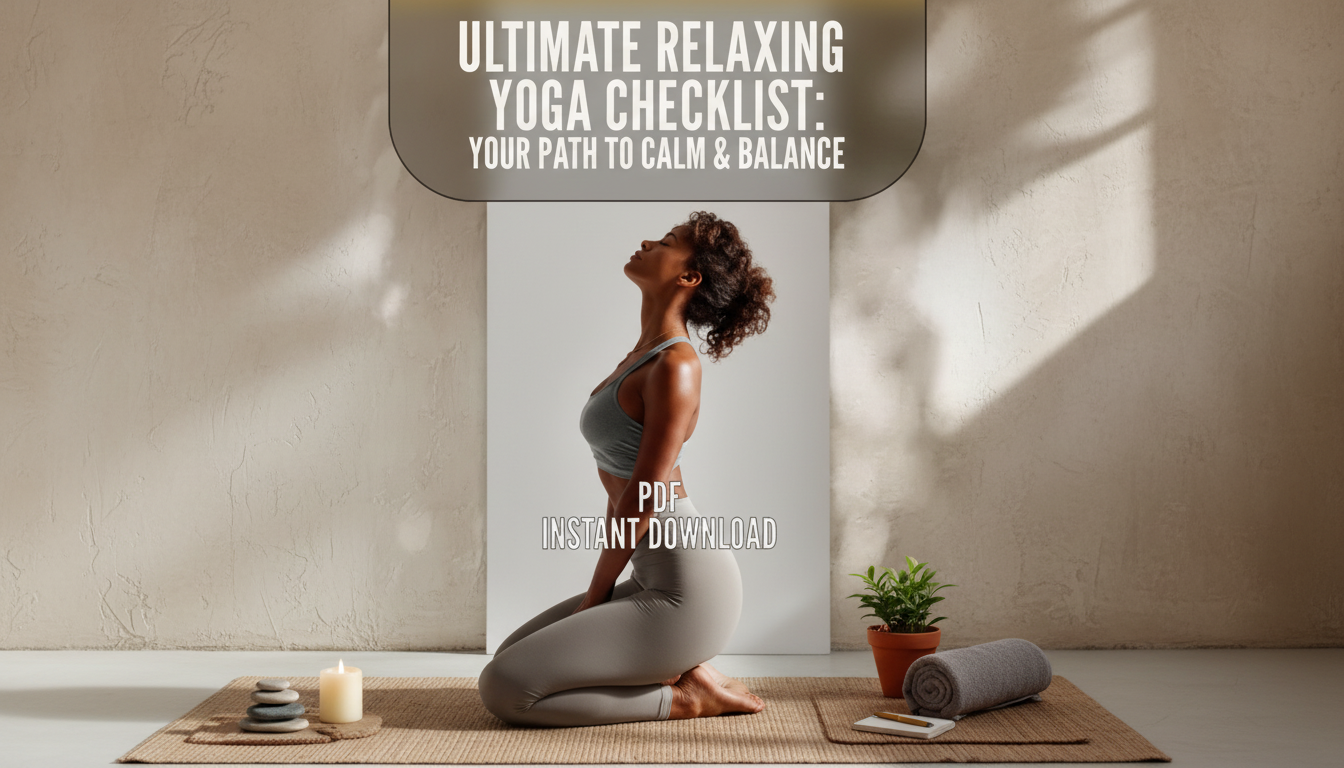
A relaxing yoga routine works best when it’s simple, repeatable, and easy to return to on busy days. A checklist-style practice supports a calm, steady rhythm with gentle pose options, breathing cues, and a self-care flow that fits into 10, 20, or 30 minutes. Use it to unwind after work, reset between tasks, or build a soothing evening ritual—without overthinking what to do next.
Yoga is widely used for stress management and sleep support, and even short sessions can help you shift out of “go mode” when practiced consistently. For more background, see the National Center for Complementary and Integrative Health (NCCIH), Harvard Health Publishing, and the Mayo Clinic.
The goal is a “quiet yes” from your body: steady breathing, relaxed facial muscles, and a sense that you could stay in the shape without bracing. If you have to grit your teeth to hold a pose, it’s no longer relaxing yoga—it’s effort.
| Need | Try this |
|---|---|
| Tight hips or low back | Bend knees in forward folds; sit on a folded blanket. |
| Neck or shoulder tension | Support head with a pillow; keep arms relaxed at sides. |
| Knee sensitivity | Add a blanket under knees; choose reclined options. |
| Restlessness | Lengthen exhales; use a timer and reduce pose variety. |
| Trouble relaxing | Add more support, reduce stretch intensity, and shorten holds. |
If you’re choosing between “a little less” and “a little more,” choose less. Relaxing yoga works when your breath stays smooth and your nervous system gets the message that you’re safe enough to soften.
Supported child’s pose → cat-cow → supine twist (both sides) → savasana.
Reclined butterfly → cat-cow → seated fold (supported) → supported bridge → legs up the wall → savasana.
Use the 20-minute flow, then extend the most soothing pose by a few minutes and repeat it once more. Keep the sequence consistent for a week so your body learns the “pattern” and settles faster.
A helpful check-in is to track one simple outcome: sleep quality, muscle tension, mood, or how easy your breath feels by the end.
If decision fatigue is what keeps a relaxing routine from sticking, a printable structure can help. Ultimate Relaxing Yoga Checklist: Your Path to Calm & Balance (digital download) is designed as a reusable, low-effort plan you can come back to on stressful weeks, during travel, or anytime you want a consistent wind-down habit.
Stress isn’t only physical; mental clutter matters too. If calm routines are part of a bigger “life reset,” these digital guides can support a steadier baseline: A No-Stress Guide to Mastering Your Paycheck Every Two Weeks and Smart Money, Smarter Apps.
Ten minutes most days is a realistic target, and even 2–4 sessions per week can make a noticeable difference over time. Practicing in the evening (or after work) and keeping the sequence consistent tends to support better sleep and steadier stress relief.
Yes, when you prioritize comfort, use props, move slowly, and avoid any sharp pain or strain. If you’re pregnant or managing a medical condition, choose highly supported shapes and get guidance from a qualified clinician or instructor.
A pillow or bolster and a blanket usually make the biggest difference because they reduce effort and help you stay supported during longer holds. A block and strap (or towel) are helpful add-ons for comfort and gentle alignment.









Leave a comment